The Differences Between Gas Turbine Generator Sets and Gas Internal Combustion Engine Generator Sets
Friends, when enjoying the various conveniences brought by stable electricity in daily life, have you ever wondered how this electrical energy is generated? Today, we will introduce you to the two core power units in the field of modern gas-fired power generation—gas turbine generator sets and gas internal combustion engine generator sets. Let us explore how they operate, their distinct characteristics and the scenarios they are respectively suited for.
Ⅰ. Gas Turbine Generator Sets
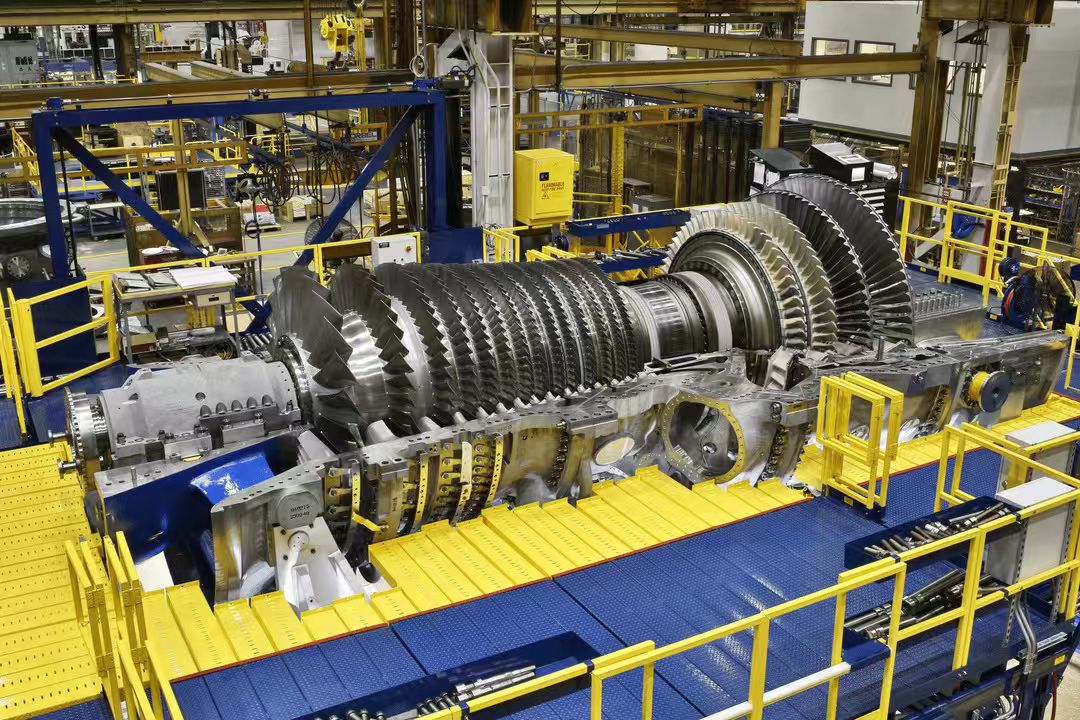
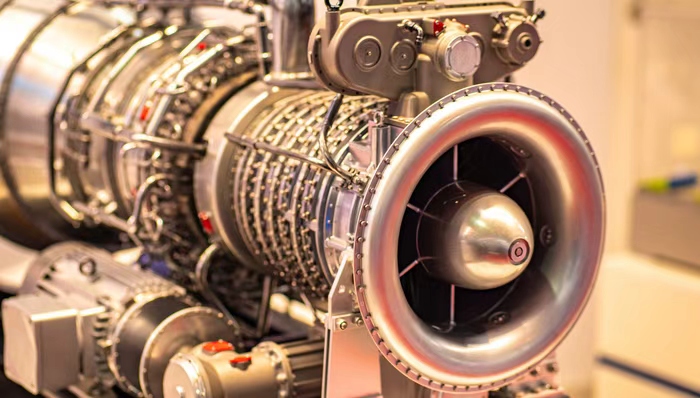
A gas turbine is a rotary power machine that converts thermal energy into mechanical energy. The compressor continuously draws in air from the atmosphere and compresses it. The compressed air enters the combustion chamber, mixes with injected fuel, and ignites to become high-temperature gas, which then flows into the gas turbine to expand and perform work, driving the turbine impeller along with the compressor impeller to rotate. The work capacity of the heated high-temperature gas is significantly enhanced, allowing the gas turbine to not only drive the compressor but also output mechanical energy to power the generator for electricity production. The entire process is continuous and efficient, devoid of the typical reciprocating piston motion found in internal combustion engines, resulting in exceptionally smooth operation.
However, gas turbine generator sets also have some drawbacks:
1. They are suitable for high-speed, stable operating conditions, with significantly reduced efficiency during idling or acceleration condition, and extremely high fuel consumption costs when idling condition.
2. Initial investment is substantial. Due to their complex technology, high requirements for materials resistant to high temperatures and durability and large single-unit power capacity, the cost per kilowatt is typically very high.
3. Although maintenance intervals are long, the complexity of its structure leads to high costs and lengthy durations for each maintenance session.
Additionally, gas turbine generator sets require a stable and high quality gas supply, making them primarily suitable for large scale primary power stations that prioritize maximum power generation efficiency and economies of scale. For small to medium-sized projects with unstable or low gas volume, gas turbine generator sets are not the optimal choice.
Ⅱ. Internal Combustion Engine Generator Sets
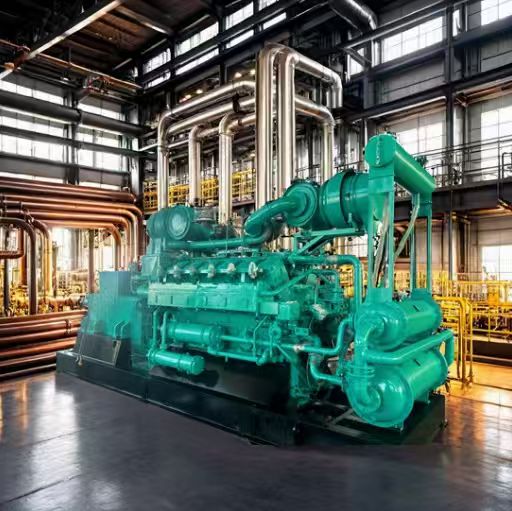
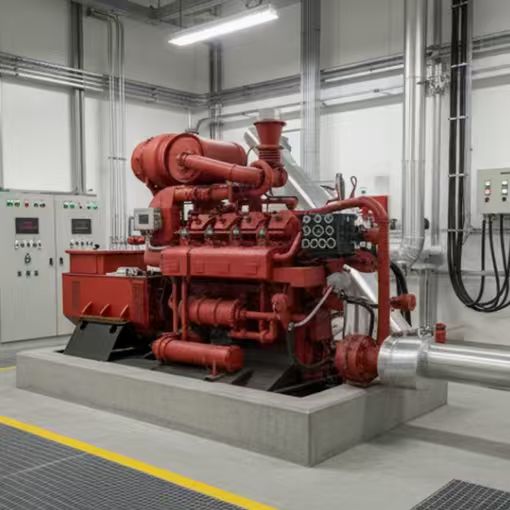
The working principle of a gas internal combustion engine is similar to that of other internal combustion engines. Air and fuel enter the cylinder, where ignition and explosion drive the piston in reciprocating motion. The mechanical work is then output through the crankshaft, driving the generator rotor to cut magnetic field lines and generate electricity.
Compared to gas turbine generator sets, gas internal combustion engine generator sets offer the following advantages:
1. High single-unit power generation efficiency with minimal efficiency decline under partial load conditions.
2. Lower costs and flexible configuration. The power range spans from hundreds to tens of thousands of kilowatts, allowing for modular arrangements suitable for distributed energy projects.
3. Shorter maintenance cycles, with lower costs and less time required for each session. Coupled with a simpler structure, overall maintenance difficulty is reduced. This resembles the routine maintenance of automotive engines, such as regular oil and spark plug replacements.
4. High comprehensive energy utilization due to the recoverability of exhaust gases and cylinder jacket water, offering multiple temperature levels suitable for Combined Cooling, Heating, and Power (CCHP) systems.
5. Wide fuel source availability, including natural gas, biogas, coalbed methane, hydrogen, cracked gas, and calcium carbide tail gas. This enables the conversion of industrial waste gases into efficient energy, promoting resource recycling.
6. Lower investment and shorter cost recovery periods.
Given these advantages, gas internal combustion engine generator sets are a more suitable choice for small to medium-sized projects requiring rapid response, frequent starts and stops, and partial load operation.
Ⅲ. Complementary progress, driving the future
Gas turbine generator sets, like critical national assets, serve as the cornerstone for building efficient and clean large-scale power systems.
Gas internal combustion engine generator sets, like precision tools, are pioneers in developing flexible and intelligent distributed energy networks. Under the guidance of the "dual carbon" goals, they are not competitors but complementary "twin stars," jointly driving the green transformation of China's energy structure.