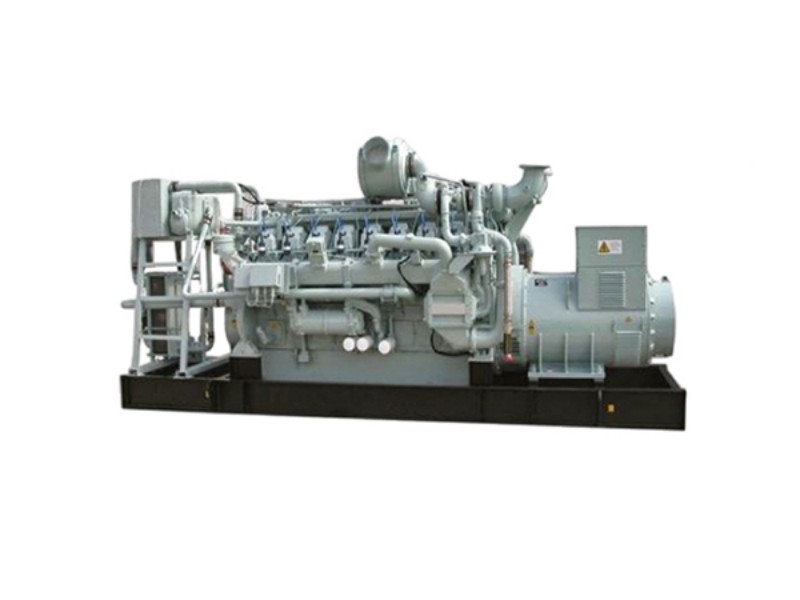
Can a gas field power itself from its own gas? In many cases, yes. A natural gas generator set can turn available gas into stable electricity. In this article, you will learn how gas fields and industrial parks can build safer, cleaner, and more cost-efficient power systems.
●Gas fields can use local gas resources to support drilling, compression, pumping, lighting, and control systems.
●Fuel quality, gas pressure, load demand, and operating hours should be checked before system design.
●Multiple generator units can improve redundancy, maintenance flexibility, and load matching.
●CHP systems can improve total energy use when the site also needs heat, steam, or hot water.
●Long-term value depends on proper sizing, fuel stability, automation, service support, and maintenance planning.
Why Gas Fields and Industrial Parks Need On-Site Gas Power
Gas fields and industrial parks often work under heavy power demand. Their electricity needs are not occasional. Pumps, compressors, workshops, lighting systems, control rooms, water treatment units, and safety systems may run for many hours each day. If power stops, production slows, equipment may shut down, and safety risks can rise.
Grid power may not always solve the problem. Many gas fields sit far from strong grid infrastructure. Some industrial parks grow faster than local power networks. In other cases, the grid exists, but voltage is unstable during peak production hours. For these sites, on-site power generation becomes part of the operating strategy, not only an emergency option.
Diesel generators can provide backup power, but they often bring fuel delivery, storage, odor, noise, and cost pressure. When a project already has access to gas, a natural gas generator set can offer a more practical long-term solution. It can reduce fuel transport work and support cleaner energy planning.
Tip: Before choosing any generator system, collect real load data from production equipment, not only the plant’s planned capacity.
How a Natural Gas Generator Set Supports Gas Field Operations
Gas fields have a unique advantage. They may already produce or handle gas on-site. Instead of depending only on external electricity, they can use available gas resources to support local power needs. This is useful for remote extraction sites, drilling support areas, gathering stations, and gas processing facilities.
A natural gas generator set can supply electricity for compressors, pumps, field offices, lighting, communication systems, and monitoring equipment. It can also support auxiliary systems that help keep production stable. For sites with weak grid access, the generator set may work as prime power. For sites connected to the grid, it may provide standby power or peak support.
Fuel condition matters here. Oil field gas or associated gas may contain moisture, sulfur, dust, pressure fluctuation, or unstable methane content. These factors affect combustion, output stability, engine life, and maintenance frequency. That is why gas treatment and technical evaluation should happen before final generator selection.
For some gas field projects, generated electricity can support internal use. In other cases, the system may also connect to the grid, depending on local regulations and project design. This helps reduce wasted gas and improves energy use at the site.
Note: Field gas should be tested before selection, because fuel composition can change generator performance and maintenance needs.
Industrial Park Power Needs Are Different
Industrial parks usually have more mixed power demand. One factory may run motors and production lines. Another may need drying, cooling, welding, pumping, or water treatment. Warehouses, offices, lighting, charging systems, and public utilities also add load. This creates a power profile that changes across the day.
For these sites, natural gas power solutions can work in several ways. A generator station can supply shared electricity for the park. It can also support key factories during grid failure. In some cases, it can reduce peak load pressure when grid electricity becomes costly or unstable.
Pipeline natural gas is often preferred when available. It gives a stable fuel supply and reduces fuel transport planning. When pipelines are not ready, Liquefied natural gas may support larger remote industrial parks. Compressed natural gas may fit smaller or transitional projects, but storage and delivery frequency must be calculated carefully.
The right system should match the park’s real demand. A single large unit may fit a stable base load. Several parallel units may work better when load changes often. Multiple units also allow maintenance without stopping the full power station.
Choosing the Right Fuel Source
Fuel choice is one of the most important decisions in a gas power project. It affects cost, system layout, safety design, maintenance, and long-term operation.
Pipeline natural gas is suitable for industrial parks and facilities near stable gas infrastructure. It supports continuous operation and reduces the need for large on-site fuel storage. It is often easier to manage when pressure and gas quality stay within a stable range.
Liquefied natural gas is useful when pipeline access is limited. It can support large power projects, but it needs storage tanks, vaporization equipment, pressure control, and safe site planning. Delivery schedules also matter. If fuel trucks are delayed, power security may be affected.
Compressed natural gas can fit medium-scale or temporary projects. It offers flexibility, but its storage volume is lower than LNG. This means transport frequency may be higher. It is important to compare fuel price, delivery distance, operating hours, and storage cost before choosing it.
Oil field gas or associated gas can offer strong value for gas field projects. It turns local resources into electricity and may reduce energy waste. However, gas cleaning, drying, desulfurization, and pressure regulation may be needed. The more unstable the gas, the more important the treatment system becomes.
Matching Generator Capacity to Real Industrial Loads
A 200kW-4000kW gas generator set can cover many industrial power needs. But capacity should never be chosen by guesswork. The right size depends on base load, peak load, motor starting current, future expansion, and redundancy needs.
Oversizing can waste investment. A generator running too far below its ideal load range may lose efficiency. It may also increase operating cost per kilowatt-hour. Undersizing is also risky. It can cause unstable voltage, overload alarms, shutdowns, and production loss.
For a gas field, the load may be shaped by pumps, compressors, and production cycles. For an industrial park, the load may shift between day and night. A phased system can help. Instead of installing one oversized unit, the project may use several units in parallel and start them as needed.
A simple fuel estimate is sometimes used in early planning: 1m³ gas power 4.2kW.h electricity. This figure should be treated as a project reference only and needs verification. Real output depends on gas calorific value, generator efficiency, load rate, site altitude, and ambient temperature.
Tip: Use load curves from real equipment operation when possible. They are more useful than nameplate power alone.
Prime Power, Standby Power, and Distributed Energy
A natural gas generator set can play different roles. The project should define the role before choosing equipment.
Prime power is needed when the generator runs as the main power source. This is common in remote gas fields, new industrial zones, and weak-grid areas. The system must handle long operating hours, stable output, and planned maintenance.
Standby power is used when the grid supplies normal electricity, but the generator starts during outages. This protects key equipment, control systems, and safety facilities. For industrial parks, standby systems can prevent sudden production loss.
Distributed energy is broader. It uses on-site generation close to the load. This can reduce transmission loss, improve energy security, and support local energy planning. A gas-fired distributed energy station may serve several buildings or factories within one site.
Some projects also use grid-parallel operation. The generator set may work with grid power, support peak loads, or send electricity to the grid where policy allows. This requires strong control systems, protection devices, and proper approval from local power authorities.
CHP Potential for Better Energy Use
Many industrial sites need both electricity and heat. A gas engine produces electricity, but it also releases heat through exhaust and cooling systems. With heat recovery, part of this energy can support hot water, steam, drying, heating, or process needs.
This is where CHP becomes valuable. It can improve total energy utilization when the site has steady thermal demand. Industrial parks with food processing, paper production, chemical processing, textiles, or drying systems may benefit from this design.
However, CHP is not suitable for every project. If the site cannot use the recovered heat, the added system may not bring enough value. Buyers should compare power demand, heat demand, operating hours, heat temperature needs, and payback period.
A natural gas generator set with CHP design should be planned as an integrated system. The generator, heat exchanger, control system, piping, safety devices, and maintenance access should be considered together.
What to Evaluate Before Buying
A gas power project is not just an equipment purchase. It is a site energy system. The buyer should evaluate the generator set, fuel system, control system, installation plan, and service support together.
First, check the power range. The supplier should support the required capacity, whether it is a single unit or a multi-unit station. For a 200kW-4000kW gas generator set project, the configuration should match site load and expansion plans.
Second, review the control system. Industrial sites need automatic start, alarm protection, load sharing, speed control, voltage regulation, and remote monitoring. For remote gas fields, automation can reduce daily operation pressure.
Third, review installation and commissioning support. Gas pipelines, ventilation, exhaust, cooling, noise control, foundations, cable routing, and safety distance all affect final operation. A poor site layout can create maintenance problems later.
Fourth, check service capability. Large generator sets need regular inspection, oil changes, spare parts, control checks, and troubleshooting. A reliable service plan helps reduce downtime and protects long-term value.
Note: The lowest purchase price may not give the lowest power cost. Fuel use, uptime, service access, and maintenance cost matter more over the project life.
Conclusion
Jiangsu Kelinyuan Clean Energy Technology Co., Ltd. provides industrial gas power solutions for demanding sites. Its natural gas generator set supports stable output, fuel adaptability, low-emission operation, and customized project service. For gas fields and industrial parks, it helps turn available gas into practical, reliable, and cost-conscious power.
FAQS
Q: What is a natural gas generator set used for?
A: A natural gas generator set supplies industrial electricity using gas fuel.
Q: Can gas fields use field gas for power?
A: Yes, after gas quality testing and treatment.
Q: Why choose a natural gas generator set over diesel?
A: A natural gas generator set can reduce fuel logistics and emissions.
Q: Is LNG suitable for industrial parks?
A: Yes, when pipeline gas is unavailable.
Q: How much power can 1m³ gas produce?
A: About 4.2kW.h, but it needs verification.
Q: What causes unstable gas generator output?
A: Poor gas quality, wrong sizing, or load changes.