Securing reliable baseload or standby power requires more than selecting an engine. The physical architecture of the installation dictates the project's financial and operational viability. Facility managers and project engineers face a critical divergence in infrastructure planning. You must choose between deploying a pre-packaged outdoor unit and constructing a dedicated indoor facility. Each path carries distinct implications for capital expenditure, deployment speed, environmental protection, and site integration. Making the wrong choice leads to severe project delays, massive cost overruns, and compromised maintenance access. This guide breaks down the engineering, financial, and operational trade-offs between a containerized setup and a traditional indoor installation. We provide a technical framework to help you determine the optimal configuration for your specific site constraints, ensuring your facility maintains uninterrupted power generation.
Key Takeaways
Deployment Velocity: Containerized units drastically reduce civil engineering requirements and installation timelines through factory-integrated balance of plant (BOP) systems.
Footprint and Real Estate: Plant room installations demand dedicated, permanent indoor square footage, whereas containerized systems utilize external, often under-utilized outdoor space.
Cost Allocation: Plant rooms shift costs toward site construction, architectural acoustics, and custom HVAC, while containerized solutions front-load costs into the packaged equipment.
Scalability: Modular containerized setups allow for phased capacity expansion, whereas plant rooms are constrained by the physical dimensions of the constructed building.
Environmental Resilience: Containerized systems offer purpose-built ingress protection against harsh weather and dust, whereas open-skid indoor units rely entirely on the integrity of the building envelope.
Defining the Architectures for Power Generation Projects
The Containerized Gas Generator Set Approach
A containerized gas generator set represents a highly integrated engineering solution. It encloses an industrial gas engine within a modified ISO-standard steel container, typically 20-foot or 40-foot lengths. You can also specify custom-built enclosures for larger megawatt-class engines that exceed standard shipping dimensions. The core engine remains mechanically identical to its open-skid equivalent. The primary differentiation lies entirely in the packaging, accessibility, and environmental isolation.
Manufacturers engineer these enclosures to house all necessary auxiliary systems. Factory-fitted components include the complete gas train, cooling radiators, and exhaust silencers. They also integrate the electrical switchgear, control panels, and fire suppression systems directly into the footprint. This creates a true plug-and-play asset. The unit arrives at your site pre-wired and pre-piped. Installation crews only need to connect the external gas supply, route the power off-take cables, and establish communication links. This streamlined approach eliminates the need for complex internal assembly and reduces the number of specialized contractors required on site.
The Plant Room Gas Generator Set Approach
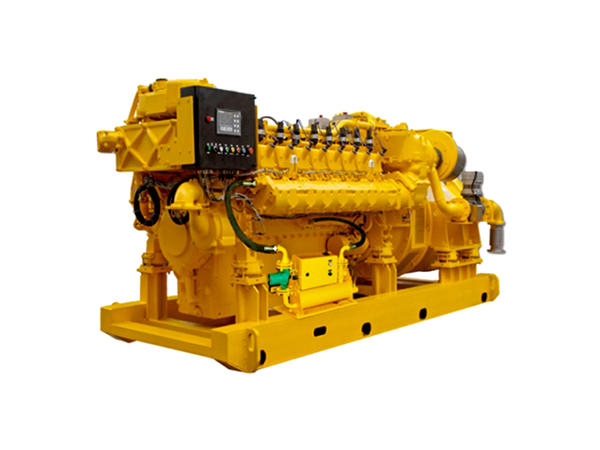
A plant room gas generator set follows a traditional, site-built methodology. You install an open-skid unit inside a permanent, purpose-built, or retrofitted building. This approach demands extensive site-specific engineering. You must design and construct the surrounding infrastructure to support the engine's operational needs from the ground up.
Site-built requirements are extensive and highly specialized. Engineers must calculate and install custom intake and exhaust louvers to manage airflow. You typically need roof-mounted or remote radiators to handle engine cooling, which requires running long lengths of coolant piping through the building structure. The indoor environment requires complex gas piping networks and heavy architectural acoustic treatments. Integration complexity is exceptionally high. Project managers must coordinate civil, mechanical, and electrical contractors to assemble the balance of plant on-site. Any miscalculation in the building's design can lead to severe operational bottlenecks or safety hazards.
Architecture Feature
Containerized Setup
Plant Room Setup
Balance of Plant (BOP)
Factory-integrated and tested
Assembled on-site by multiple contractors
Cooling System
Integrated roof or front-mounted radiators
Remote or roof-mounted radiators requiring custom piping
Exhaust Routing
Pre-installed internal silencers with short roof stacks
Custom-welded flues routed through building walls/roofs
Vibration Isolation
Internal spring mounts pre-calibrated at factory
Requires custom inertia bases and structural isolation
Core Engineering and Site Evaluation Dimensions
Space, Footprint, and Real Estate Constraints
You must evaluate outdoor versus indoor footprint availability before selecting an architecture. Containerized units preserve valuable indoor facility space for core operations. They utilize exterior areas that often remain under-utilized, such as parking lot perimeters or adjacent dirt lots. However, you must provide adequate outdoor clearance. Technicians need space for maintenance access and wide door swings. The unit also requires unobstructed airflow for the cooling radiators to function efficiently without recirculating hot exhaust air. A typical 40-foot container requires at least three meters of clearance on all sides to ensure safe operation and maintenance access.
Analyze plant room spatial demands carefully. Indoor units require significant clearance around the entire engine block. Mechanics need room to perform major overhauls, pull pistons, and replace heavy components safely. You often must install dedicated overhead crane access for heavy lifting during maintenance. Furthermore, engineers must design specific room dimensions to manage the intense radiant heat generated by the engine. Failing to provide adequate indoor space compromises both maintenance safety and thermal efficiency. You cannot simply squeeze an open-skid generator into a spare utility closet; it requires a dedicated, purpose-built hall.
Environmental Protection and Ingress Mitigation
Assess the weatherproofing capabilities of containerized units. Manufacturers build these enclosures to withstand harsh outdoor elements. They feature high IP-rated designs, typically IP54 or IP56, to prevent water and dust ingress. You can specify specialized filtration systems, such as heavy-duty cyclonic filters, for high-dust environments like mining sites or desert installations. Heavy-duty anti-corrosion marine-grade paint treatments, often rated C5-M, ensure the steel structure survives decades of exposure to rain, snow, and salt air. The structural integrity of the container acts as the primary defense against environmental degradation.
Assess plant room environmental control mechanisms. An indoor setup relies entirely on the building envelope to protect the equipment. The structure must block moisture, dust, and extreme ambient conditions. This requires robust architectural planning. You must isolate the dedicated generator room from other facility operations to prevent cross-contamination of dust or fumes. If the building's roof leaks or the intake louvers fail to block driving rain during a storm, the open-skid engine remains completely vulnerable to catastrophic water damage. The building itself becomes a critical component of the generator's reliability.
Ventilation, Cooling, and Thermal Management
Assess containerized thermal dynamics. Factory engineers utilize computational fluid dynamics (CFD) to ensure optimal internal airflow. They design the enclosure to route cool air directly over the alternator and engine block before exhausting it through the radiator. However, high ambient outdoor temperatures can impact performance. You may face power derating if you do not specify tropical cooling packages for hot climates. Motorized louvers often control airflow to maintain steady internal temperatures regardless of external weather fluctuations. These louvers automatically close when the engine shuts down, retaining residual heat in cold climates to ensure rapid starting.
Assess plant room HVAC complexities. Indoor installations require custom calculations for both combustion air and cooling air. You cannot rely on natural drafts. Large forced-draft ventilation fans are necessary to prevent indoor temperature accumulation. These massive fans introduce a significant parasitic load, drawing power away from your facility and reducing the overall net electrical output of the system. Engineers must carefully balance intake and exhaust volumes to maintain a slight negative pressure within the room. This negative pressure ensures that radiant heat and minor exhaust leaks do not migrate into adjacent areas of the building.
Acoustic Performance and Noise Attenuation
Compare standardized versus custom acoustics. A containerized unit comes with guaranteed, factory-tested sound pressure levels. You can easily specify a unit that meets 75 dB(A) at 7 meters. The manufacturer achieves this utilizing integrated acoustic insulation, internal baffles, and custom roof-mounted silencers. The acoustic materials, typically high-density mineral wool covered by perforated galvanized steel, are pre-installed. You know exactly how loud the unit will be before it arrives on site, eliminating compliance guesswork and preventing costly disputes with local municipalities regarding noise ordinances.
Evaluate plant room soundproofing challenges. Achieving stringent noise regulations indoors requires massive architectural interventions. You will need to install heavy acoustic baffles in the air intake and exhaust pathways, which restrict airflow and require larger ventilation fans to compensate. The room requires specialized acoustic doors and vibration-isolated concrete foundations to prevent low-frequency structural noise transmission. These custom interventions introduce significant project risk. If the acoustic engineer miscalculates the room's resonance, retrofitting soundproofing after construction is incredibly expensive and highly disruptive to ongoing facility operations.
Gas Safety, Fuel Integration, and Compliance (ATEX/NFPA)
Address gas train and fuel integration directly. Containerized units feature pre-certified, actively ventilated gas compartments. They come equipped with integrated gas leak detection sensors and automated double block and bleed shut-off valves. You can seamlessly house gas conditioning, filtering, and zero-pressure regulation equipment within the package footprint. The factory ensures all internal zoning complies with strict explosion-proof standards, such as ATEX Zone 2, before shipping. This pre-certification drastically simplifies the local fire marshal inspection process.
Address indoor gas risks and compliance. Plant rooms require rigorous adherence to local fire codes and NFPA standards. You must install specialized explosion-proof (EX) ventilation systems that run continuously to clear potential gas leaks. Complex gas routing through a building introduces multiple potential leak points at every flange and weld. Facilities often require separate, dedicated gas handling rooms or external processing skids. This is necessary to mitigate the severe risks associated with indoor natural gas accumulation and potential ignition. The liability and insurance premiums associated with piping high-pressure gas into a main facility building are substantial.
Project Timelines and Deployment Realities
Civil Works and Permitting Complexities
Detail the permitting variance between the two options. Plant rooms often require full commercial building permits. Municipalities may demand environmental impact assessments for permanent structures. You must excavate and pour extensive civil foundations, often requiring deep pilings depending on soil conditions. The construction process involves erecting structural steel, pouring concrete walls, and installing heavy-duty roofing. This civil phase can add six to twelve months to the project timeline before the engine even arrives on site. Weather delays during construction further exacerbate these timelines.
Detail the containerized advantage for any power generation project. Municipalities typically classify enclosed generators as temporary equipment rather than permanent structures. They require only a flat, load-bearing concrete pad or steel plinth. This classification significantly accelerates the permitting phase. You bypass the lengthy approvals required for new building construction. Installation crews can position and secure the unit in a matter of days rather than months. The civil works are limited to trenching for electrical conduits and pouring a standard reinforced concrete slab.
Excavate the designated outdoor area and compact the subgrade soil.
Install underground electrical conduits and gas supply sleeves.
Pour a reinforced concrete pad, ensuring it cures to the required compressive strength.
Crane the containerized unit directly onto the pad and secure it with anchor bolts.
Connect the external gas line, power cables, and communication wires.
FAT (Factory Acceptance Testing) vs. SAT (Site Acceptance Testing)
Explain the risk mitigation provided by FAT. Containerized units undergo complete system testing at the manufacturing facility. Engineers test the engine, cooling loops, control panels, and integrated gas systems as a single cohesive unit. They perform full-load bank testing, step-load acceptance, and transient response checks before shipping. They verify the operation of the motorized louvers, fire suppression systems, and gas leak detectors. This rigorous factory testing minimizes on-site troubleshooting and guarantees performance out of the box. When the unit arrives, you know it works.
Explain the burden of SAT for plant rooms. Because contractors assemble the components on-site, comprehensive testing can only occur during final commissioning. The engine, remote radiators, and switchgear meet for the first time in your building. This increases the risk of integration failures. If the custom ventilation system fails to cool the engine during the site load test, the entire project faces severe delays while engineers redesign the airflow. Troubleshooting complex control wiring between disparate components installed by different contractors often leads to finger-pointing and extended commissioning schedules.
Financial Analysis: CAPEX and OPEX
Upfront Capital Expenditure (CAPEX) Dynamics
Compare equipment versus construction costs. Containerized units carry a higher initial equipment price tag. You are paying for the steel enclosure, the factory integration, and the pre-installed auxiliary systems. However, they offer drastically lower civil, architectural, and installation costs. The total installed cost is often lower because you eliminate the need for building construction and extensive site labor. You avoid paying premium hourly rates for specialized welders and pipefitters to work on-site for months.
Analyze the hidden costs of plant rooms. You must factor in the expenses of architectural design and structural engineering. You will hire specialized mechanical contractors to pipe the gas and weld the exhaust systems. Dedicated generator room ventilation systems are expensive to procure and install. Furthermore, extended labor hours for on-site assembly drive up the total capital expenditure significantly, often exceeding initial estimates. The cost of structural vibration isolation and architectural acoustic treatments alone can rival the cost of the engine itself.
Long-Term Maintenance and Operational Expenditure (OPEX)
Evaluate accessibility and labor efficiency. Plant rooms generally offer superior, climate-controlled environments. They provide ample walk-around space for maintenance personnel. Technicians can perform routine service, such as spark plug replacements and valve lash adjustments, comfortably, regardless of the weather outside. This controlled environment can potentially reduce labor hours and improve the overall quality of maintenance work over the asset's life. Tools and spare parts can be stored securely in the same room.
Evaluate containerized maintenance realities. Modern containers feature wide-access doors and easily removable panels to improve serviceability. Internal lighting, heavy-duty floor plating, and custom walkways help technicians navigate the space. However, severe weather can complicate outdoor servicing routines. Performing a top-end engine overhaul during a blizzard or a heatwave is challenging and may require erecting temporary weather shelters. Both setups offer excellent lifespans, provided you rigorously maintain the container's anti-corrosion coatings, door hinges, and weather seals.
Scalability, Relocation, and Asset Flexibility
Modular Expansion with Containerized Units
Explain the add-on capability of modular designs. Facilities can scale their power capacity rapidly by simply dropping in additional containerized units. You place a new unit on an adjacent concrete pad and synchronize it via a common electrical bus using isochronous load sharing controls. This modular approach allows you to align capital spending with actual power demand growth, preventing over-investment in unused capacity. You only buy the power you need today, knowing you can easily expand tomorrow.
Discuss asset mobility and financial flexibility. You can physically relocate containerized units to different facilities if operational priorities shift. Mining companies, oil and gas operators, and remote industrial sites often deploy them to temporary locations. If your business no longer requires the asset, you can sell the complete, functional unit on the secondary market. This provides a clear exit strategy and retains significant asset value. The unit is simply disconnected, lifted onto a flatbed trailer, and shipped to the buyer.
Fixed Capacity Limitations in Plant Rooms
Explain the architectural constraints of indoor installations. Expanding a plant room setup requires either pre-building excess floor space or undertaking costly building expansions later. Pre-building empty space results in wasted initial capital expenditure and ongoing maintenance of unused square footage. Expanding the building later disrupts facility operations and requires new permits, civil works, and extended downtime. You are locked into the physical dimensions of the room you built on day one.
Discuss the risk of stranded assets. Indoor open-skid units are heavily integrated into the host building's infrastructure. The exhaust flues, remote radiators, and custom gas piping are permanently fixed. Removing the engine requires dismantling parts of the building, cutting welded pipes, and hiring heavy rigging crews. This makes relocation economically unviable. The generator essentially becomes a stranded asset, permanently tied to that specific piece of real estate. If you sell the building, the generator stays behind.
Selecting the Right Gas Generator Set Supplier
Evaluating Supplier Expertise
Differentiate between raw engine manufacturers and complete system packagers. You must ensure the gas generator set supplier has proven expertise in acoustic engineering, thermal packaging, and custom enclosure fabrication. Building a reliable engine is only half the battle. The supplier must understand exactly how that engine behaves inside a steel box under extreme environmental conditions. They need a track record of successfully integrating complex gas trains and control systems into tight spaces without compromising safety or maintenance access.
Assess the supplier's technical support infrastructure. Look for partners who offer comprehensive 3D modeling and CFD analysis during the design phase. They should provide detailed documentation proving the enclosure's thermal and acoustic performance before manufacturing begins. Furthermore, demand lifecycle service agreements specific to an industrial gas genset. The supplier must guarantee parts availability, remote monitoring capabilities, and rapid response times for the entire integrated package, not just the engine block.
Conclusion
The choice between a containerized and plant room setup is rarely about engine performance. It is a strict calculation of real estate availability, deployment urgency, environmental exposure, and construction risk tolerance. You must weigh the speed and modularity of an outdoor package against the spacious, climate-controlled environment of an indoor installation.
Opt for a containerized unit when deployment speed is critical or indoor space is at a premium. It is the superior choice if you anticipate future relocation, plan to scale capacity in phases, or lack existing infrastructure. Conversely, opt for a plant room setup when integrating power into a massive, new facility build. It makes sense where you require ultra-high capacity centralized power and want to provide maintenance crews with extreme weather protection.
To finalize your project architecture, execute the following steps:
Conduct a comprehensive site audit to map available outdoor space and measure indoor facility dimensions accurately.
Review local municipal noise ordinances and emissions regulations to determine your exact acoustic and exhaust requirements.
Consult an engineering specialist to evaluate gas supply routing, pressure requirements, and local fire code compliance.
Request detailed CAPEX and OPEX projections from potential suppliers for both configurations to run a complete financial comparison.
FAQ
Q: What is the lifespan of a containerized gas generator set compared to a plant room unit?
A: Both configurations utilize the same core industrial gas engine and can last 20 to 30 years with proper maintenance. Containerized units require periodic inspection of weather seals, door hinges, and anti-corrosion coatings to ensure their lifespan matches indoor units.
Q: Do plant room gas generator sets require specialized ventilation?
A: Yes. Unlike outdoor units, dedicated indoor generator rooms require custom-engineered forced-draft ventilation. This system supplies necessary combustion air, removes intense radiant heat from the engine block, and prevents the dangerous accumulation of leaked natural gas.
Q: Can a natural gas generator set be retrofitted into an existing building?
A: Yes, but it is highly complex and expensive. It requires significant architectural modifications, including structural floor reinforcement, custom exhaust routing through existing roofs, and upgraded ventilation systems to comply with modern fire and safety codes. A natural gas generator set demands strict adherence to indoor gas handling regulations.
Q: How does extreme weather affect a containerized gas generator set?
A: Purpose-built containers are engineered specifically for harsh environments. They feature heavy-duty weather seals, specialized air filtration, and marine-grade coatings. However, extreme ambient temperatures may require you to specify optional tropical cooling packages or cold-weather block heaters to maintain optimal performance.
Q: Is it easier to expand power capacity with containerized units?
A: Absolutely. Containerized units offer modular scalability. You can easily add new units to the site on adjacent concrete pads and synchronize them with the existing power grid. This avoids the costly and disruptive construction required to expand an indoor plant room.
Q: What are the primary maintenance differences between the two setups?
A: Plant rooms provide a spacious, climate-controlled environment, making major engine overhauls easier and safer regardless of external weather. Containerized units feature removable panels and wide doors for access, but servicing them exposes technicians directly to outdoor elements.