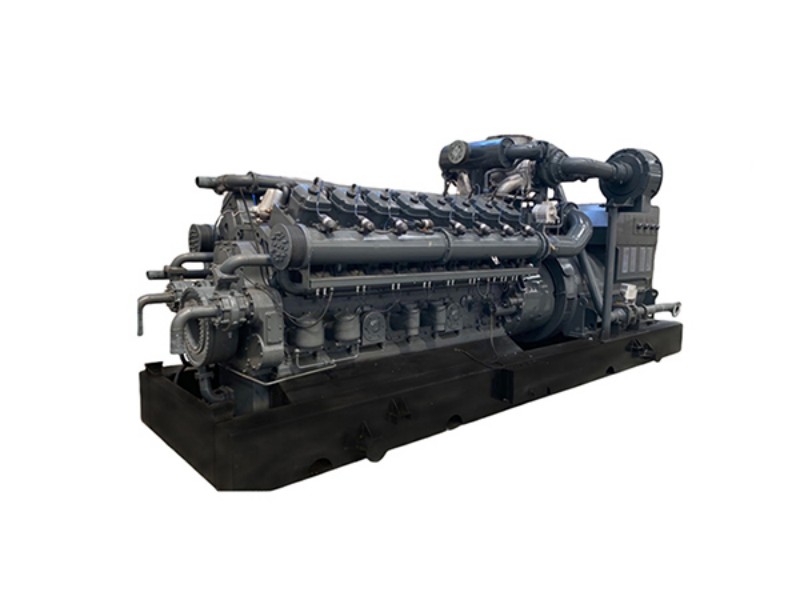
Industrial power failure is not a small issue. It can stop production, damage equipment, and delay delivery. A natural gas generator set can solve this problem when selected well. In this guide, you will learn how to choose the right unit for real industrial projects.
Key Takeaways
●A natural gas generator set should match the project load, not only the rated power on paper.
●Industrial buyers should define whether the unit will run as standby, prime, continuous, or distributed power.
●Fuel supply is a key decision. Pipeline natural gas is stable, while Liquefied natural gas and Compressed natural gas need more storage planning.
● A 200kW-4000kW gas generator set range can cover many factories, industrial parks, data centers, and remote project sites.
●Gas quality, pressure, flow rate, ambient temperature, altitude, ventilation, and grid connection all affect final performance.
●Long-term cost includes fuel use, maintenance, parts, automation, commissioning, and service support.
●The best choice is not always the largest unit. It is the unit that fits the site, duty cycle, and growth plan.
Define the Industrial Power Requirement First
Choosing a generator starts with one basic question. What work must it do?
For industrial projects, this answer must be specific. A generator used for emergency backup has a different design focus from one used for daily power generation. A natural gas generator set for standby power may only run during grid failure. A unit for prime or continuous power may run for long hours every day. This changes engine selection, cooling design, control logic, and maintenance planning.
Industrial loads also have two sides. One is normal running load. The other is starting load. Motors, pumps, compressors, fans, crushers, and large production lines may need much higher current during start-up. If the generator is sized only by running load, it may trip, slow down, or fail to start the equipment.
You should also confirm voltage, frequency, phase, and connection mode early. Some projects only need isolated power. Others need grid synchronization, parallel operation, or power export. These requirements should be clear before supplier selection.
Future expansion also matters. Many factories add production lines after the first phase. A modular generator solution may help if the project expects growth. In some cases, several smaller units are better than one large unit. They can share load, support maintenance, and reduce downtime risk.
Tip:Prepare a load list before asking for a quotation, including motor power, starting method, running hours, and future expansion needs.
Evaluate the Available Natural Gas Supply
Fuel supply can decide whether a project succeeds. A powerful generator is not useful if the gas supply is unstable.
Pipeline natural gas is often the first choice for long-term industrial operation. It is suitable when the site has stable gas pressure, steady flow, and strong local supply infrastructure. It can support factories, power stations, industrial parks, and commercial energy centers.
Liquefied natural gas is useful when pipeline access is limited. It can serve remote sites or projects that need flexible fuel delivery. However, LNG needs storage tanks, vaporization equipment, safety systems, and regular logistics planning.
Compressed natural gas can also work for certain sites. It offers flexible supply, but it usually needs more attention to storage pressure, refilling schedule, and gas consumption rate. For large industrial loads, CNG logistics must be checked carefully.
Gas quality is another key factor. Methane content, moisture, sulfur, dust, and pressure fluctuation can affect combustion. Poor gas quality may reduce efficiency or increase maintenance. Gas treatment may be needed before the fuel enters the engine.
Some project teams use a rough fuel calculation during early planning. For example, 1m³ gas power 4.2kW.h electricity can be used as a quick estimate. This data should be marked as a planning reference and verified by real gas composition, engine efficiency, load rate, and supplier test data.
Note:Do not finalize generator size before checking gas pressure, gas flow, gas quality, and daily supply stability.
Choose the Right Generator Configuration
After load and fuel are clear, the next step is configuration.
A single large natural gas generator set can simplify layout and control. It may fit projects with stable high load and limited installation space. Yet it creates a stronger dependence on one machine. If it stops, the whole power supply may stop.
Multiple parallel units offer better flexibility. When load is low, only part of the system can run. When load grows, more units can join. This helps improve fuel efficiency and gives the maintenance team more room to work. For critical sites, parallel units can also support redundancy.
Standard gas generator sets may fit common factory loads, workshops, commercial buildings, and small industrial power stations. They are usually easier to deploy and maintain. They also work well when power demand is moderate and stable.
High-performance generator sets are better for demanding projects. These projects may need stronger load response, long-time operation, better combustion control, and advanced automation. They may include remote sites, high-altitude areas, mission-critical plants, or large process facilities.
Large-capacity gas generator sets serve heavy industrial loads, distributed energy systems, data centers, and utility support. For these projects, the decision should include grid connection, heat recovery, emission rules, protection logic, and long-term service plans.
Project Need
Better Configuration Direction
Stable emergency backup
Standby natural gas generator set
Daily plant operation
Prime or continuous gas power
Growing industrial park
Modular parallel units
Limited gas supply
Higher-efficiency configuration
Critical power demand
Redundant units and smart control
Large heavy industry
200kW-4000kW gas generator set range
Check Site Conditions Before Selecting the Model
A generator does not work in a brochure. It works at a real site.
Ambient temperature can change output and cooling performance. Hot climates may reduce available power if the system is not designed well. Cold sites may need jacket water heating, gas preheating, or enclosure upgrades.
Altitude is also important. Air density drops at high altitude. This can affect combustion and rated output. A project in a mountain area may need a high-altitude configuration or derating review.
Installation space should be checked before purchase. The generator needs room for air intake, exhaust, cooling, wiring, gas pipelines, fire safety, and maintenance access. A tight room can create heat problems and service difficulty.
Ventilation is not optional. Poor airflow can raise engine temperature, reduce output, and shorten component life. Exhaust discharge also needs safe routing. It should not return hot air into the generator room.
Noise and vibration control may be required near offices, hospitals, residential areas, or city facilities. Soundproof enclosures, silencers, vibration pads, and better layout can reduce site impact.
Remote and harsh environments need more protection. Dust, humidity, salt air, cold weather, and unstable access can increase failure risk. In these cases, the generator should be easier to inspect and maintain.
Tip:Ask the supplier to review site photos, layout drawings, altitude, temperature range, and ventilation before confirming the final design.
Compare Efficiency, Emissions, and Operating Cost
The purchase price is only one part of the cost. For industrial projects, the bigger cost often appears after the generator starts working.
Fuel cost is usually the main operating cost. Even a small efficiency difference can become large after thousands of running hours. This is why project teams should compare gas consumption at different load rates, not only full-load data.
Natural gas can offer cleaner combustion than many traditional fuel choices. It can help reduce smoke, odor, and some emissions. This is useful for industrial users facing environmental rules or carbon reduction targets. Still, emission performance should be checked against local standards.
Maintenance cost also matters. Spark plugs, oil, filters, cooling systems, gas systems, and control parts need regular service. A cheaper generator may not be cheaper if it needs more shutdowns or hard-to-find parts.
Combined heat and power can improve value when the site can use heat. Some factories need hot water, steam support, drying, or process heating. If waste heat can be recovered, the overall energy use may improve.
A good cost review should include purchase price, fuel cost, installation, gas treatment, civil work, control system, spare parts, service, and downtime risk. This gives a more honest view of long-term value.
Note:Use lifecycle cost as the buying standard, not only the first purchase price.
Review Control System and Automation Capabilities
Industrial projects need stable power. They also need fast control.
Automatic start and stop can protect production during grid failure. It helps the generator respond without manual delay. For standby use, automatic transfer is often important. For continuous use, automatic load control helps maintain stable operation.
Parallel control is needed when several generator sets work together. The system must manage load sharing, synchronization, protection, and unit sequencing. Poor parallel control can cause unstable voltage, frequency issues, or unnecessary shutdown.
Remote monitoring helps the operation team see problems early. It can track running data, alarms, temperature, oil pressure, power output, and fuel status. This is useful for remote stations and sites with limited staff.
Protection functions should also be reviewed. These may include overspeed, high temperature, low oil pressure, overload, gas leakage alarm, emergency stop, and fault shutdown. Good protection does not only protect the generator. It also protects people, equipment, and production.
The control system should be easy to use. Operators should not need complex steps for daily work. Clear alarms, simple screens, and service records can reduce mistakes.
Choose a Supplier That Can Support Engineering and Service
A natural gas generator set is an engineered system. The supplier should do more than ship equipment.
Before selection, the supplier should ask for real project data. This includes load demand, duty type, gas condition, site layout, installation environment, grid connection plan, and local requirements. Without these details, a proposal may look good but fail on site.
Customization is often needed for industrial projects. This may include gas treatment, cooling system, enclosure, control cabinet, low-noise design, voltage setting, parallel system, and remote monitoring. These choices should match the site, not a general template.
Factory testing is also important. It can reduce risk before shipment. Buyers should ask what tests are done and what records can be provided. Installation and commissioning support should also be clear before contract signing.
After-sales service affects long-term reliability. A strong service system should include technical support, spare parts, maintenance guidance, and operator training. For continuous or critical power projects, response speed can be as important as product quality.
A good supplier helps buyers avoid oversizing, undersizing, weak gas matching, poor ventilation, and incomplete control planning. This support can save money and reduce project risk.
Conclusion
Choosing the right generator starts with load, fuel, site, and service. A natural gas generator set should support stable output, efficient operation, and safe long-term use.Jiangsu Kelinyuan Clean Energy Technology Co., Ltd. provides industrial gas generator solutions, custom service, smart control, and full project support for cleaner, reliable power.
FAQS
Q: What is a natural gas generator set?
A: A natural gas generator set uses gas fuel to produce industrial electricity.