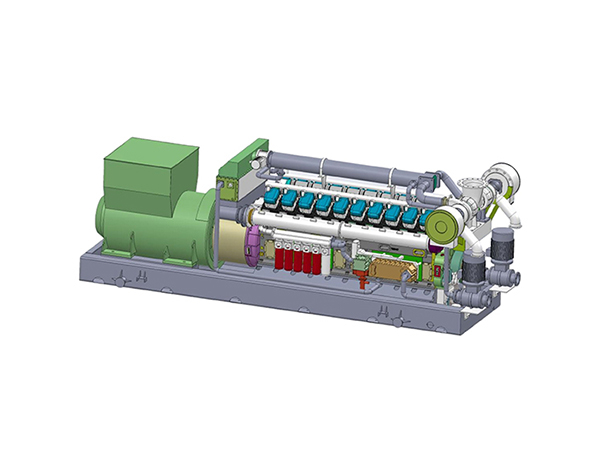
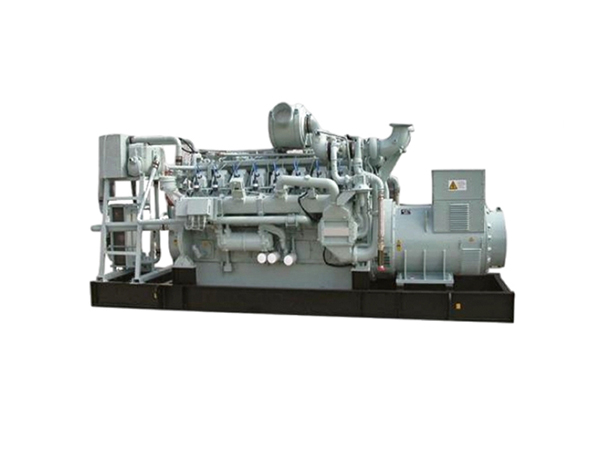
Industrial buyers often receive a generator quotation that looks manageable, only to discover that gas-line upgrades, switchgear, foundations, ventilation, commissioning, and ongoing fuel use can change the project budget substantially. A Natural Gas Generator Set with the right kW rating may still be unsuitable if the site’s gas pressure, load profile, voltage, or operating hours are not considered.
A realistic cost estimate should separate equipment price from installation and lifetime ownership. Understanding the main cost drivers, hidden site expenses, fuel calculations, maintenance needs, and quotation exclusions helps project teams compare proposals accurately and avoid expensive changes after purchase.
Build the Budget Around the Whole Project, Not the Generator Price
Equipment Cost Is Only the First Line Item
A generator-only quotation usually covers the engine, alternator, base frame, controller, starting system, and standard cooling arrangement. A packaged price may add the gas train, exhaust components, batteries, and basic protection. Delivered cost introduces freight, insurance, export packing, and unloading, while a fully installed figure includes site construction, electrical connections, startup, testing, and acceptance.
Optional equipment can change the budget even when rated power stays the same. Weatherproof or sound-attenuated enclosures, automatic transfer equipment, synchronization controls, remote monitoring, exhaust treatment, and heat-recovery hardware all expand the scope. Every quotation should therefore state exactly where the supplier’s delivery boundary ends.
Use Capacity Bands for Early Budgeting
Capacity bands help indicate the likely scale of supporting infrastructure. Projects around 100–250 kW may serve selected production loads, small factories, or emergency systems. Installations in the 500–1,000 kW range often support larger production lines, processing plants, hospitals, or facility-wide backup. Systems above 1.5 MW are more likely to involve medium-voltage distribution, parallel operation, substantial foundations, and engineered cooling.
Larger units may offer a lower equipment cost per kilowatt, but heavier equipment can require special transport, cranes, larger cables, and higher-rated switchgear. Early budgets should therefore separate equipment-only and installed-cost estimates.
Set Aside a Contingency Before the Site Survey
A preliminary budget should include a contingency for conditions that cannot be confirmed from a product specification alone. Common uncertainties include gas-service upgrades, long pipe or cable runs, extra ventilation, structural reinforcement, permitting conditions, and revised protection requirements. This allowance protects the feasibility estimate until the gas, civil, mechanical, and electrical scopes are verified.
Why Two Generators With the Same Output Can Have Different Prices
Duty Rating and Load Behavior Change the Design
Standby, prime, and continuous-duty ratings represent different operating expectations. A standby unit may run mainly during testing and outages, while a prime-power system must tolerate long operating periods and changing loads. Continuous applications place greater emphasis on thermal management, service intervals, component life, and maintainability. Annual hours, average load factor, motor starts, rapid load changes, sensitive electronics, and redundancy all affect the final specification.
Incorrect sizing creates cost in both directions. An undersized Natural Gas Generator Set may struggle with motor starting, voltage recovery, or peak demand. Excessive oversizing raises capital cost and can leave the engine operating inefficiently at light load. A load study should therefore separate steady demand, starting demand, step loads, critical loads, and future expansion.
Multiple smaller sets can improve redundancy and load matching, but they also require synchronization, load sharing, extra breakers, more piping, and more complex commissioning. The resilience benefit must be compared with the added capital cost.
Voltage, Cooling and Controls Matter as Much as kW
Voltage can change the project architecture even when capacity is similar. A compact configuration may provide 100 kW of continuous output at 400 V, 50 Hz, and 1,500 rpm, while a larger industrial set may deliver 1,500–2,000 kW at 10.5 kV and 1,000 rpm. A large unit may also weigh approximately 26,000 kg, use double-temperature forced cooling, and require 300–400 kPa gas inlet pressure. Those differences affect switchgear, foundations, lifting, cable selection, fuel regulation, and maintenance access—not just equipment price.
A manually operated island system is simpler than an automatic standby package, parallel plant, or grid-connected installation. Remote monitoring, load shedding, black-start logic, and utility protection add engineering and testing. Ambient temperature, altitude, dust, and humidity may also require derating, filtration, enclosure changes, or upgraded heat rejection.
The Site Costs That Most Often Disrupt Industrial Budgets
Confirm the Gas Supply Before Selecting the Generator
Gas availability should be checked before equipment is finalized because a pipeline connection does not automatically provide enough pressure or flow. The survey should confirm inlet pressure, hourly volume, stability at peak demand, gas composition, methane content, pipe diameter, regulator capacity, and meter capacity. A large Natural Gas Generator Set may need a dedicated service or pressure level that the existing utility connection cannot maintain. Some high-capacity configurations require an inlet pressure of approximately 300–400 kPa.
Possible additions include a larger meter, utility reinforcement, dedicated piping, filtration, moisture removal, gas detection, and emergency shutoff valves. Low-calorific-value or variable gas can also affect achievable output and consumption. These items belong in the project budget, and the supplier should receive current gas analysis and confirmed pressure data before guaranteeing performance.
Civil and Mechanical Work Depends on the Installation Location
Outdoor ground-level installations are usually easier to estimate than indoor, rooftop, basement, coastal, dusty, or high-temperature sites. Civil work may include foundations, vibration isolation, drainage, weather protection, lifting plans, and structural reinforcement. Mechanical work can involve combustion-air openings, room ventilation, radiator airflow, remote cooling, exhaust routing, silencers, and heat rejection.
Poor access often becomes an expensive surprise. A large set may require a crane, temporary road preparation, wall removal, roof lifting, or staged assembly. Maintenance clearances also matter because filters, cylinder heads, radiators, and alternator components must remain accessible throughout the equipment’s life.
Noise and emissions controls should match local requirements and operating hours. An urban hospital may need a different enclosure from a remote industrial site. Acoustic treatment, exhaust after-treatment, monitoring ports, and ventilation resistance should therefore be identified before the enclosure and cooling system are ordered.
Electrical Integration Can Rival the Generator Package
Electrical scope may include an automatic transfer switch, breakers, protection relays, switchgear, cables, conduits, trenching, grounding, and control wiring. Parallel installations add synchronization, load sharing, bus control, and selective load shedding. Grid-connected systems can require interconnection studies, utility-approved protection, metering, and witnessed tests.
Startup and handover are separate work packages. A complete scope should include pre-start inspection, no-load testing, site-load or load-bank testing, protection verification, control-sequence checks, operator training, drawings, manuals, and test records. Buyers should confirm whether freight, supervision, consumables, temporary test equipment, and acceptance testing are included. A single missing item can turn a low initial quote into a higher final invoice.
Turn Fuel and Maintenance Into a Ten-Year Cost Estimate
Calculate Fuel Cost at the Expected Load
Fuel cost should be calculated from the expected operating profile rather than nameplate capacity alone:
Annual Fuel Cost = Gas Consumption at Expected Load × Annual Runtime × Local Gas Tariff
Supplier data should show consumption at 25%, 50%, 75%, and 100% load. A standby project needs exercise hours and probable outage runtime, whereas prime power requires a detailed annual schedule. Auxiliary equipment and site derating must also be included because they affect net electricity delivered.
Local fuel prices can materially change the result. In the United States, average industrial natural gas prices reached approximately $8.43 per thousand cubic feet in February 2026 and $4.90 in April 2026. The difference demonstrates why a generic national assumption is unsuitable for a site-specific investment decision.
A 100 kW configuration may achieve approximately 35% generation efficiency with gas consumption of about 10,286±5% kJ/kWh. A 1,500–2,000 kW configuration may reach approximately 42% efficiency with consumption near 8,570±5% kJ/kWh. Final calculations should use the exact configuration, gas quality, load, and reference conditions agreed in the contract.
CHP can improve economics when a facility has steady demand for process heat, hot water, or space heating. Well-matched CHP applications can operate at approximately 65%–75% overall efficiency when useful electricity and recovered heat are considered together. Unused heat, however, has no financial value.
Include Service, Overhauls and Downtime
Routine maintenance includes oil and filters, spark plugs, ignition components, coolant, batteries, air filters, gas-system inspections, and scheduled testing. Annual budgets should reflect operating hours as well as calendar-based service. Local labor, spare-parts availability, service access, and response commitments also influence cost.
Longer-term allowances may cover cylinder-head work, turbocharger or ignition repairs, cooling-system refurbishment, alternator maintenance, and major overhaul. A ten-year model should place these events in the years when they are likely to occur rather than averaging every expense into one annual figure.
Downtime is another ownership cost. In manufacturing, a failed start or extended repair can stop production, spoil material, delay deliveries, or require temporary generation. A useful total-cost model therefore combines equipment, installation, fuel, planned maintenance, major service, and downtime risk.
Compare Quotes Without Falling for the Lowest Price
Send Every Supplier the Same Project Brief
Comparable quotations begin with identical technical information. The request should state output, duty rating, voltage, frequency, runtime, average load, peak demand, motor-starting requirements, gas composition, pressure, available flow, altitude, ambient temperature, enclosure needs, noise targets, operating mode, and test requirements. Without this common basis, suppliers may price different systems under the same headline kilowatt figure.
The brief should also define whether the supplier is responsible for the generator package only, delivery, installation supervision, complete installation, or turnkey commissioning. Documentation, operator training, spare parts, and performance guarantees should be listed explicitly.
Check the Scope, Exclusions and Performance Guarantees
Each proposal should identify the generator, gas train, cooling system, enclosure, ATS or synchronization equipment, switchgear, freight, supervision, commissioning, training, spare parts, and warranty support. The seller should also state guaranteed output under site conditions, fuel consumption at agreed loads, delivery boundary, buyer responsibilities, warranty start date, and acceptance criteria.
Before selecting a Natural Gas Generator Set, confirm the following:
●A proper load study has been completed.
●The gas system can support full output at peak demand.
●Civil, mechanical, electrical, and control interfaces are defined.
●Exclusions and options are clearly separated.
●Performance is guaranteed for the stated gas and site conditions.
●Five- or ten-year ownership cost has been compared.
A higher quotation may offer better value when it includes engineering and testing that prevent later changes. Premium controls should still be challenged when they do not support the actual duty. The goal is the lowest-risk system that meets the project’s operational and financial requirements.
Conclusion
A realistic industrial power budget must account for more than generator capacity and purchase price. Gas availability, electrical integration, site preparation, operating hours, maintenance, and quotation exclusions all influence the final cost and long-term reliability of a Natural Gas Generator Set. Careful load analysis and total-cost comparison can prevent oversizing, unexpected installation work, and avoidable downtime.
Jiangsu Kelinyuan Clean Energy Technology Co., Ltd. provides gas generator systems, project configuration support, commissioning, and after-sales services that can help industrial users match equipment performance with site conditions, fuel characteristics, and operating requirements.
FAQ
Q: How much does an industrial Natural Gas Generator Set cost?
A: Costs vary widely by output, duty rating, voltage, enclosure, controls, and project scope. Installation and supporting infrastructure can add substantially to the equipment price.
Q: What factors have the greatest effect on generator pricing?
A: The main factors include power capacity, standby or continuous duty, gas pressure requirements, cooling design, switchgear, sound attenuation, emissions controls, and site conditions.
Q: How much does industrial natural gas generator installation cost?
A: Installation cost depends on gas-line upgrades, foundations, electrical integration, transfer equipment, permits, ventilation, lifting access, and commissioning requirements at the project site.
Q: How much natural gas does a generator use per hour?
A: Hourly consumption depends on generator size, engine efficiency, gas quality, and operating load. Buyers should compare supplier data at several load percentages, not only full load.
Q: What ongoing costs should an industrial buyer budget for?
A: Long-term costs include fuel, routine servicing, filters, oil, spark plugs, coolant, batteries, inspections, load testing, major overhauls, and possible production downtime.