Wastewater treatment plants consume large amounts of electricity to operate pumps, aeration systems, sludge treatment equipment, and other essential processes. At facilities equipped with anaerobic digesters, part of that energy demand can be met using a fuel already produced on site: biogas.
Instead of using all the digester gas for heating or sending excess gas to a flare, a plant can use suitably treated biogas to operate an industrial generator set. The electricity can serve the treatment facility, while recovered engine heat may support digester heating when a combined heat and power system is included.
KLY supplies biogas generator sets for wastewater, agricultural, and organic waste-to-energy projects. Choosing a suitable system requires careful planning because the generator set must work with the plant's gas production, electrical demand, and treatment operations.
How Wastewater Treatment Plants Produce Biogas
Many municipal and industrial wastewater facilities use anaerobic digestion to stabilize organic sludge. During this process, microorganisms break down organic matter in an oxygen-free environment, producing biogas and treated digestate.
The biogas typically contains methane and carbon dioxide, along with moisture and smaller amounts of other gases. Methane is the part that provides useful fuel energy.
The amount of gas produced depends on several factors, including the type and quantity of sludge, organic loading, digestion temperature, and process stability. A facility receiving more organic material does not automatically produce more usable gas unless the digester can process that material effectively.
Biogas can be used in boilers, industrial gas engines, or other properly designed energy equipment. At a wastewater treatment plant, the most practical arrangement often depends on how much electricity and heat the facility consumes each day.
From Digester Gas to Electrical Power
The power generation process follows a clear sequence:
Biogas collection: Gas produced by the anaerobic digester is collected through the plant's gas handling system.
Gas conditioning: Moisture and contaminants are reduced according to the engine's fuel specifications.
Pressure control: The gas supply is regulated to meet the generating system's requirements.
Power generation: The treated gas fuels an internal combustion engine connected to an alternator.
Electrical distribution: The generated electricity is supplied through the approved plant electrical system.
Heat recovery: Where a CHP system is included, recoverable engine heat can be transferred to useful plant processes.
Each stage affects the others. If the fuel supply is unstable or gas treatment is insufficient, the generating system may require more maintenance or experience interruptions.
Why Use a Biogas Generator Set at a Wastewater Plant?
Lower Dependence on Purchased Electricity
Electricity is an important operating cost for many wastewater facilities. Aeration alone can account for a substantial share of a treatment plant's electrical demand, although the actual proportion depends on the process design.
A wastewater treatment biogas generator set allows the facility to convert part of its own digester gas into electricity. When the generated energy is used on site, the plant can reduce the amount purchased from the grid.
The benefit depends on annual energy output, equipment efficiency, maintenance costs, and local electricity prices. The generator set must also consume enough available biogas to justify the investment.
Better Use of an Existing Energy Resource
Some wastewater facilities flare gas that cannot be used immediately. Flaring may still be necessary as part of the plant's gas management and safety system, but capturing usable gas energy can provide additional value.
A generator set converts the methane's energy into electricity. This can make productive use of gas that might otherwise have limited energy recovery.
The environmental benefit depends on the complete system, including methane management, gas cleanup, electricity displaced, and plant operating practices.
Potential for Combined Heat and Power
An industrial gas engine produces heat as well as electricity. Depending on the system design, useful heat may be recovered from engine cooling circuits and exhaust gases.
At a wastewater treatment plant, recovered heat can be used to support anaerobic digester temperature control or other suitable heating loads.
This is known as combined heat and power, or CHP. It can improve overall fuel utilization when there is a consistent demand for the recovered heat.
However, heat recovery equipment should not be assumed to be included in every generator set quotation. Heat exchangers, circulation equipment, controls, and the required integration must be included in the project specification.
Gas Quality Is a Major Engineering Challenge
Biogas from wastewater sludge is not the same as clean pipeline natural gas. Its composition can vary, and it may contain contaminants that are harmful to engines.
Three conditions are especially important.
Hydrogen Sulfide and Corrosion
Hydrogen sulfide is commonly found in raw biogas. During combustion and under certain operating conditions, sulfur compounds can contribute to corrosion and damage to engine components.
A suitable desulfurization system reduces hydrogen sulfide to the level required by the selected engine. The treatment method depends on gas flow, incoming sulfur concentration, and the target gas quality.
Moisture and Condensation
Raw digester gas is often saturated with water vapor. As the gas cools in piping, moisture can condense and collect in low points.
Condensate needs to be removed and managed to protect the gas train and support reliable operation. Depending on the system, this may involve cooling, separation, drainage, filtration, or drying.
Siloxanes and Other Trace Contaminants
Some wastewater treatment plants receive substances that introduce siloxanes into the digester gas. During combustion, these compounds can form hard deposits that contribute to wear and maintenance problems.
Siloxane removal is therefore an important consideration where testing shows elevated levels. Not every facility needs the same treatment stages, so a representative gas analysis should guide the final design.
KLY provides custom gas purification systems, including desulfurization, gas storage, pressurization, and integrated control solutions. These are relevant to wastewater projects where fuel treatment must be matched to the selected generator set.
How to Size a Biogas Generator Set for Wastewater Treatment
A wastewater facility should not choose the generator set based only on its electricity bill or treatment capacity. The design must account for the energy available in the digester gas.
A useful starting point is to evaluate four groups of data.
Project Data
Why It Matters
Daily and hourly biogas production
Shows how much fuel may be available for power generation
Methane content and contaminant levels
Determines fuel energy and treatment requirements
Plant electricity demand
Helps establish useful generating capacity
Existing heat demand and gas use
Shows how much biogas is available after other uses
A plant may produce enough gas during peak operation to fuel a larger unit but not enough to maintain that output every day. Designing around maximum production alone can lead to frequent part-load operation or shutdowns.
The generator set must also be able to use the treated gas within its approved operating conditions. A gas analysis should therefore form part of the equipment selection process.
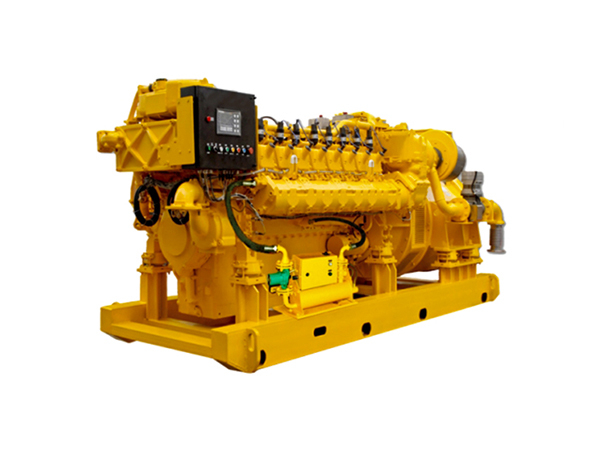
The product's NPG250 configuration lists a continuous electrical output of 250kW under its published reference conditions. It uses a 12-cylinder engine, operates at 1500RPM, and is specified for 50Hz output at 400/230V.
KLY identifies biogas from waste treatment facilities among the product's compatible fuel applications. For an actual wastewater project, engineers must confirm the required biogas configuration and achievable output using the plant's methane concentration, gas pressure, and contaminant limits.
The model may be appropriate for a facility whose available fuel and electrical demand support a generator set in this capacity range. It should not be selected solely because the plant is described as medium-sized.
A larger wastewater treatment plant may require another configuration or multiple units. The correct system depends on fuel production and the intended operating strategy.
Should the Plant Use One Generator Set or Multiple Units?
Some wastewater treatment plants benefit from a single generator set, while others may prefer a modular power generation arrangement.
A single unit can simplify the installation when gas production and electrical demand are stable. It generally requires fewer engines, fewer individual service schedules, and a less complicated power management arrangement.
Multiple generator sets may provide more flexibility when available gas or electrical demand changes significantly. One unit may continue operating while another is shut down for maintenance, provided the remaining equipment has sufficient fuel and meets the electrical requirements.
However, adding units also increases the number of engines, controls, electrical connections, and maintenance tasks. A multi-unit system requires suitable synchronization and load-sharing equipment when parallel operation is planned.
The decision should consider normal operating hours and maintenance needs rather than treating more units as automatically better.
Integrating the Generator Set with Plant Operations
Wastewater treatment equipment often operates continuously, but not every electrical load remains constant. Pumps may cycle, aeration demand may change, and sludge treatment equipment may run according to a schedule.
A biogas generator set should be integrated with the plant's electrical system in a way that handles these changes safely.
Grid-Connected Operation
In a grid-connected arrangement, the generator set can supply part of the site's electricity while the grid provides any additional demand.
This can be useful where biogas output varies. The plant does not need to make the generator set follow every change in its electrical consumption, provided the approved interconnection and control system manages power flows correctly.
Grid export, if intended, requires the necessary utility approval and protection equipment.
Island or Emergency Operation
A grid-connected biogas generator set should not automatically be considered a standby power system. During a grid failure, a conventional grid-parallel arrangement may disconnect for safety.
If the wastewater plant requires the generator set to serve essential loads during an outage, the system must be designed for that operating mode. Suitable controls, switching, protection, load management, and reliable fuel availability are necessary.
This distinction is critical because wastewater treatment processes may need uninterrupted or rapidly restored electricity.
Biogas generation can support plant energy resilience, but the actual backup capability depends on the complete electrical system, not the engine alone.
Maintenance Requirements in a Wastewater Environment
Wastewater facilities often have humid or chemically demanding environments. Gas treatment equipment, piping, sensors, and engine components all need appropriate inspection and maintenance.
Operators should monitor gas pressure, temperature, methane concentration, and relevant contaminants. Condensate systems and filters must be maintained so that liquid or unwanted substances do not enter the engine.
Routine generator set maintenance also includes lubrication, cooling-system checks, ignition components, and inspections recommended by the engine manufacturer.
A clear maintenance schedule helps keep the equipment available while reducing unexpected interruptions.
KLY's one-stop generator set services cover project planning, configuration, installation support, commissioning, and after-sales service. This broader support can be useful when a wastewater facility needs the engine and gas treatment equipment designed as one project.
What Should a Wastewater Plant Prepare Before Requesting a Quote?
A good technical proposal begins with the actual treatment process and operating data.
Plant owners and EPC contractors should prepare:
Wastewater treatment capacity and sludge digestion process details
Average, minimum, and maximum biogas production
Gas analysis, including methane, hydrogen sulfide, and siloxanes where relevant
Required electricity output and planned operating hours
Existing boiler or digester heating requirements
Available space, ventilation arrangements, and site conditions
Grid connection details and required operating mode
Future sludge treatment or digestion expansion plans
These details help the supplier evaluate a suitable generator set, gas treatment arrangement, and electrical configuration.
Turning Wastewater Biogas into Useful Plant Energy
An industrial biogas generator set for wastewater treatment can convert digester gas into useful electrical energy and, when combined with suitable heat recovery equipment, provide heat for plant processes.
The most successful system is not simply the one with the largest rated output. It is the one matched to the available gas, required treatment equipment, plant energy demand, and long-term operating plan.
KLY works with industrial customers on gas generator sets, purification systems, and integrated energy solutions. For a new wastewater-to-energy project or an upgrade to an existing digestion facility, contact KLY with your gas production records and electrical requirements to discuss a suitable project configuration.