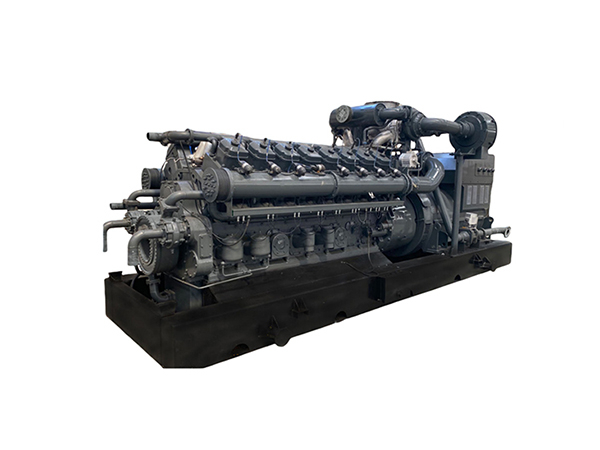
A 500kW biogas generator set offers twice the nominal electrical capacity of a 250kW unit. However, choosing the larger machine does not automatically mean a project will generate twice as much electricity. Unlike pipeline natural gas, biogas production can change with the amount of organic material being processed, digester conditions, and methane content.
For industrial project developers, the real question is whether the available gas can support the required power output over the planned operating hours. A generator set that is too large may run at reduced load or stop when fuel becomes insufficient. A unit that is too small may leave usable biogas available for other purposes or flaring.
KLY supplies industrial biogas generator sets for waste treatment, agricultural digestion, and other organic waste-to-energy projects. This guide explains how to compare 250kW and 500kW capacity options based on the actual needs of a biogas power plant.
250kW vs. 500kW Biogas Generator Sets at a Glance
Both sizes use a gas engine to drive an alternator, converting the chemical energy in treated biogas into electrical power. Their main difference is generating capacity, but the larger system also affects fuel demand, installation planning, and operation.
Selection Factor
250kW Generator Set
500kW Generator Set
Nominal electrical output
250kW
500kW
Relative fuel demand
Lower
Approximately twice as high at comparable efficiency and load
Project suitability
Moderate gas supply and electrical demand
Larger, more consistent gas supply
Space and auxiliaries
Generally smaller installation
Greater supporting equipment requirements
Load management
More suitable for certain lower-load projects
Better suited to sustained higher demand
Expansion option
Can add units if the system supports it
Larger capacity in one machine
Main sizing concern
Underusing a growing gas supply
Oversizing against available fuel
The table describes general engineering considerations, not guaranteed operating data. A real comparison must use the selected models' performance curves and the site's fuel conditions.
How Much Biogas Can the Project Supply?
Use the Available Gas, Not Just the Total Gas Produced
Generator set selection should start with an energy balance. The amount of biogas generated by a digester is important, but the amount actually available to the power station matters more.
A wastewater treatment plant, for example, may already burn part of its digester gas in a boiler. An agricultural biogas facility may also use gas for heating or other processes. The generator set must be sized around the remaining fuel supply after these existing demands are considered.
A useful gas assessment includes:
Average biogas flow in cubic meters per hour or per day
Minimum flow during low-production periods
Methane concentration and expected variation
Existing gas consumption by boilers or other equipment
Gas storage volume and pressure control
Planned generator set operating hours
For an existing facility, several months of operating records are more valuable than a single day's measurement. New projects should use conservative production estimates based on feedstock characteristics and digester design.
Why Methane Concentration Changes the Answer
Methane is the main combustible component of biogas. Carbon dioxide makes up much of the remaining volume, while moisture, hydrogen sulfide, and trace contaminants may also be present.
As methane concentration falls, the usable energy contained in each cubic meter of gas decreases. A generator set that can deliver a certain output with one fuel composition may require more gas or experience reduced available power with another composition.
This matters when comparing a 250kW biogas generator set with a 500kW alternative. Both machines need fuel that meets their operating specifications, and the larger one requires a greater energy supply to maintain higher output.
How Much Fuel Would Each Generator Set Need?
A preliminary calculation can help buyers understand the relationship between generator capacity and biogas production.
Assume the treated biogas contains approximately 60% methane and has a lower heating value of 6kWh per cubic meter. If the generating system converts 35% of that fuel energy into electricity, each cubic meter would produce approximately:
6 × 0.35 = 2.1kWh of electrical energy
At full nominal output, the estimated fuel requirement would be:
Output
Illustrative Biogas Demand
250kW
Approximately 119m³/hour
500kW
Approximately 238m³/hour
250kW for 20 hours
Approximately 2,380m³/day
500kW for 20 hours
Approximately 4,760m³/day
These numbers are an illustrative engineering calculation, not fuel-consumption figures promised by KLY. They assume the same fuel heating value and electrical efficiency in both cases. Actual consumption depends on engine design, operating load, auxiliary equipment, fuel pressure, and gas quality.
The calculation nevertheless reveals an important point: a 500kW project needs a much stronger fuel supply than a 250kW project if both are expected to run for similar periods.
Buyers should request a project-specific fuel consumption assessment before selecting the generator set.
When Does a 250kW Biogas Generator Set Make Sense?
A 250kW configuration is worth considering when a facility has moderate electrical demand and sufficient treated biogas to support operation at a practical load.
Possible applications include agricultural digesters, organic waste treatment plants, and wastewater facilities where the gas production rate does not justify a larger generating unit.
KLY's 12V135G gas generator set provides a relevant equipment example. Its NPG250 configuration lists 250kW continuous electrical output under the published reference conditions, with a 12-cylinder engine operating at 1500RPM and a 400/230V, 50Hz electrical arrangement.
The product page identifies biogas among its compatible fuel applications. For an actual biogas project, the engine configuration and available output must be evaluated using the site's gas analysis rather than assuming the published natural-gas-based rating applies without adjustment.
A 250kW unit may also suit phased development. If the facility expects to increase feedstock processing later, the electrical system can potentially be planned to accommodate additional generator sets.
That expansion should be designed from the beginning. Future parallel operation requires compatible controls, switchgear, protection, and sufficient gas supply for the additional units.
When Is a 500kW Biogas Generator Set the Better Choice?
A 500kW-class system becomes more attractive when both gas production and electrical consumption are high enough to support its output.
A larger wastewater treatment facility, food waste processing plant, or agricultural digestion project may have enough biogas for a higher-capacity engine. If the site also has a substantial continuous electrical load, a larger unit may simplify the generating arrangement compared with installing several smaller engines.
KLY's 12V190G gas generator set includes a 12V190G-1 configuration with a published rated power range of 500–600kW. The product lists 1000RPM operating speed, 50Hz frequency, water cooling, and electric starting.
KLY also identifies biogas among the gases to which the 12V190G can be adapted. As with the smaller model, the final biogas-rated output and continuous operating conditions need to be confirmed for the particular project.
One concern with a larger generator set is part-load operation. If the plant regularly produces too little gas or uses much less electricity than expected, the engine may operate outside its most economical load range. The result can be lower utilization and an extended investment payback period.
A larger nameplate rating is valuable only when the project can use it.
Gas Treatment Is Essential at Either Size
Choosing the generator set is only one part of the power station design. Raw biogas often contains moisture and hydrogen sulfide, while gas from some wastewater applications may contain siloxanes.
These contaminants can create corrosion, deposits, and maintenance problems if they are not reduced to levels acceptable for the engine.
A typical treatment arrangement may involve moisture separation, desulfurization, filtration, gas pressure control, and additional contaminant removal where required.
The required equipment depends on the fuel analysis. A 500kW installation may need larger treatment capacity because it generally consumes more gas, but a 250kW system needs equally suitable fuel quality.
KLY provides custom gas purification and energy solutions, including desulfurization, gas holders, pressurization, and integrated controls. These systems should be considered together with the generator set rather than added after the equipment has been ordered.
Operating Hours, Electrical Demand, and Future Expansion
A project that uses electricity continuously has different needs from one that runs a generator set only during selected hours.
If a factory has a stable 300kW load, a single 500kW-class unit may operate at partial output for long periods. A smaller unit could cover much of the demand but would not supply the full load alone. The preferred arrangement depends on the actual demand profile, the generator's permitted load range, and the availability of grid power.
Electricity export can change the calculation as well. A site allowed to export power may be able to use generation beyond its immediate internal demand. Without an export agreement, excess generating capacity may offer little value.
Buyers should review annual operation rather than focus only on a peak-demand figure. Daily gas flow, electricity consumption, seasonal changes, and planned maintenance all affect the useful output of the system.
A future increase in waste processing capacity is another consideration. If the digester is expected to produce more gas after expansion, the project should consider whether an additional generator set, a larger first unit, or a different operating arrangement will provide the best long-term fit.
What Information Should You Give the Manufacturer?
A meaningful quotation requires more than a requested power rating. KLY's engineering team needs enough project information to assess the generator set and the supporting gas treatment and electrical systems.
Prepare the following before requesting a proposal:
Biogas analysis: Methane, carbon dioxide, hydrogen sulfide, moisture, and other relevant contaminants.
Fuel availability: Average and minimum gas flow, plus gas storage information.
Electrical demand: Normal load, peak load, and planned operating hours.
Operating mode: Grid-connected, island operation, or another approved arrangement.
Site conditions: Ambient temperature, altitude, installation location, and available space.
Project plans: Future expansion, heat recovery, and required maintenance access.
These details help determine whether a 250kW or 500kW configuration can operate reliably and whether the project needs additional supporting equipment.
Choosing the Right Capacity for Your Biogas Power Plant
The better generator set is not necessarily the larger one. A 250kW unit may serve a project with moderate gas production more effectively, while a 500kW-class unit can make sense where higher fuel availability and electrical demand support sustained operation.
KLY offers industrial gas generator sets and project-specific fuel treatment solutions for waste-to-energy applications. To discuss a suitable capacity, contact KLY with your gas analysis, expected production volume, and electrical load profile. Selecting the generator set around actual operating conditions is the starting point for an efficient biogas power generation system.