The global accumulation of waste tires poses serious environmental challenges, from land pollution to fire hazards and mosquito breeding. Traditional disposal methods like landfilling or incineration are increasingly being restricted due to their ecological impact. As a result, there is a growing need for sustainable and energy-efficient solutions to manage this form of waste.
Tire pyrolysis has emerged as a promising technology that not only reduces waste but also converts used tires into valuable resources—most notably pyrolysis gas, which can be used to generate electricity. By feeding this gas into specially designed tire pyrolysis gas generator sets, operators can transform waste into clean, usable power.
This article explores how tire pyrolysis gas is produced and how it powers generator sets, helping plant operators, investors, and engineers better understand the value and implementation of this innovative energy recovery process.
What Is Tire Pyrolysis?
Tire pyrolysis is a thermal decomposition process that breaks down scrap tires into useful byproducts by heating them in the absence of oxygen. Unlike combustion, pyrolysis does not involve burning but instead uses high temperatures (typically 400–600°C) to convert complex hydrocarbons into simpler substances. This makes it an environmentally friendly method for recycling end-of-life tires while recovering energy.
The primary feedstock for pyrolysis is waste tires, which are rich in rubber and synthetic polymers. These materials, when exposed to controlled heat in an oxygen-free chamber, decompose into valuable outputs. Pyrolysis systems generally come in three configurations:
Batch reactors – suitable for small-scale operations with periodic loading and unloading.
Semi-continuous reactors – allow limited feeding during operation for improved efficiency.
Fully continuous reactors – ideal for large-scale industrial use with uninterrupted processing and automation.
The main outputs of tire pyrolysis include:
Pyrolysis gas – a combustible synthetic gas that can be used in tire pyrolysis gas generator sets for power generation.
Pyrolysis oil – an alternative fuel for boilers or refining into diesel-like products.
Carbon black (char) – used as a filler in rubber or processed into activated carbon.
Steel wire – recovered from the tire structure and recyclable as scrap metal.
Through tire pyrolysis, waste management and clean energy production are brought together in a closed-loop solution, helping reduce environmental impact while creating new business opportunities.
How Tire Pyrolysis Gas Is Produced
Tire pyrolysis gas is generated through a controlled thermochemical process in which waste tires are heated in an oxygen-free environment. This process—known as pyrolysis—causes the long-chain polymers in rubber to break down into smaller molecules, resulting in the release of gases, oils, and solid residues.
The Pyrolysis Process
During pyrolysis, scrap tires are fed into a sealed reactor and gradually heated to temperatures ranging from 400°C to 600°C. In the absence of oxygen, the rubber compounds decompose instead of burning. As the temperature rises, volatile gases are released and directed through condensation and gas-cleaning systems. These non-condensable gases make up the tire pyrolysis gas—a key energy-rich fuel source.
Typical Gas Components
Tire pyrolysis gas generally contains a mixture of combustible and inert components, such as:
Methane (CH₄)
Hydrogen (H₂)
Carbon monoxide (CO)
Ethylene, butylene, and other light hydrocarbons
This gas has a moderate to high calorific value, making it suitable for power generation using specially adapted tire pyrolysis gas generator sets.
Factors Influencing Gas Composition
Several variables influence the quality and composition of the pyrolysis gas:
Reactor temperature: Higher temperatures generally increase gas yield but may lower its calorific value if not optimized.
Tire composition: Natural vs. synthetic rubber content, additives, and the presence of steel wires all affect the breakdown process.
Reactor type and design: Continuous systems often yield more stable gas quality compared to batch operations due to uniform heating and steady feedstock input.
Understanding these factors is essential for maximizing gas output and ensuring compatibility with generator systems. Clean, consistent gas improves generator efficiency and reduces maintenance requirements, making it a crucial step in the overall tire pyrolysis energy chain.

Power Generation with Tire Pyrolysis Gas Generator Sets
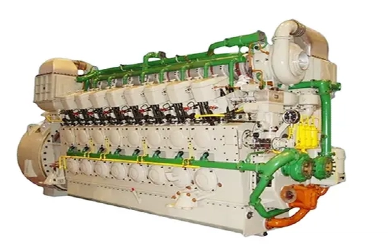
Once tire pyrolysis gas is produced and purified, it becomes a valuable fuel source for on-site power generation. Tire pyrolysis gas generator sets are specifically engineered to convert this synthetic gas into electricity, providing a clean, efficient, and sustainable energy solution.
Feeding Purified Gas into Generator Sets
Before entering the generator set, pyrolysis gas must be thoroughly cleaned and cooled to remove tar, moisture, sulfur, and other impurities that could damage the engine. Once purified, the gas is fed into the combustion chamber of the generator’s engine, where it ignites and drives mechanical energy that is converted into electrical output via an alternator.
Proper pressure regulation and air–fuel ratio control systems ensure efficient combustion and optimal engine performance.
Key Features of Suitable Generator Sets
Not all gas generators are compatible with pyrolysis gas. To ensure reliable operation, the generator set should include:
Fuel adaptability: The system must handle the varying calorific values and gas compositions typical of tire pyrolysis fuel.
Emission control technologies: Catalytic converters and exhaust treatment systems help meet environmental regulations.
Stability and durability: Advanced ignition systems, robust engine components, and real-time gas monitoring allow the generator to perform well even with fluctuating gas quality.
These features are essential for maintaining operational efficiency, extending equipment life, and minimizing maintenance costs.
Power Capacity Options and Scalability
Tire pyrolysis projects vary in scale, so generator sets are available in different capacities:
300kW – ideal for small-scale plants or pilot projects
500kW – a common choice for mid-sized operations
1000kW – suitable for industrial applications requiring high output
Many systems are modular and scalable, allowing plant operators to expand capacity over time or integrate with grid-connected systems.
Environmental and Economic Benefits of Tire Pyrolysis Gas Generator Sets
Integrating tire pyrolysis gas generator sets into waste tire recycling systems not only helps manage environmental challenges but also creates meaningful economic value. This dual benefit makes pyrolysis technology increasingly attractive to both environmental regulators and energy investors.
Reduction of Tire Waste and Landfill Pressure
Waste tires are a growing global problem due to their non-biodegradable nature and bulk volume. Traditional disposal methods like landfilling or open burning pose significant environmental hazards.
By using pyrolysis, old tires are converted into valuable resources, including gas, oil, carbon black, and steel wire. This greatly reduces the volume of tires sent to landfills and helps prevent associated issues such as fire risk, groundwater contamination, and vector-borne diseases. It’s a sustainable way to turn waste into energy.
Clean Energy Production and Reduced Fossil Fuel Use
The tire pyrolysis gas generated can effectively replace fossil fuels like coal or natural gas for electricity generation. When used in advanced gas generator sets, this fuel:
Produces fewer greenhouse gas emissions
Helps decrease dependence on finite fossil fuel resources
Promotes the development of decentralized, renewable energy systems
This clean energy production aligns with global carbon reduction goals and supports transitions toward circular economies.
Revenue Potential: Electricity, Byproducts, and Carbon Credits
From an economic perspective, tire pyrolysis gas generator sets open multiple revenue streams:
Electricity generation: On-site power can be used internally or sold to the grid.
Byproduct sales: Pyrolysis oil, carbon black, and scrap steel can be sold to industrial markets.
Carbon credits and green incentives: Plants operating clean and efficient systems may qualify for emissions trading schemes or government subsidies.
These combined benefits enhance the return on investment (ROI) and long-term profitability of pyrolysis-based energy projects.
Conclusion
Converting tire pyrolysis gas into electrical power offers significant environmental and economic benefits, turning waste tires into a valuable energy resource. To maximize these benefits, it is crucial to select the right generator set technology that ensures efficiency, reliability, and emission compliance.
Partnering with experienced experts can provide tailored solutions that meet specific project needs and optimize performance. For those interested in high-quality tire pyrolysis gas generator sets and professional consultation, Jiangsu Kelinyuan Clean Energy Technology Co., Ltd. is a trusted choice, offering advanced equipment and comprehensive support to help your project succeed sustainably and profitably.